Routinely sleeping less than six hours a night significantly increases the risk of stroke or having stroke symptoms in middle-aged adults who are not overweight and have a low risk of sleep-disordered breathing, a new study suggests.
Health providers and their patients should increase their awareness of the impact of sleep on the development of stroke.
It may be important for healthcare providers to ask their patients about their sleep, particularly the patients who have few traditional risk factors for stroke such as obesity or obstructive sleep apnea.
The findings are based on 5666 working adults aged 45 and older enrolled in the well-known Reasons for Geographic and Racial Differences in Stroke (REGARDS) study. All were free of stroke, transient ischemic attack, stroke symptoms, or sleep-disordered breathing at baseline.
The study was different from previous studies on the association between sleep and stroke because experts examined only participants who did not have a high risk for obstructive sleep apnea. Obstructive sleep apnea is known to be associated with stroke events; therefore, in previous studies, the presence of obstructive sleep apnea may have actually explained the association between extremes in sleep duration and stroke.
In a fully adjusted model including adults with normal body-mass index, a nightly sleep duration of less than six hours was strongly associated with a greater incidence of stroke symptoms.
It's estimated that 30% of working adults get less than six hours of sleep each night. Short sleep duration is a precursor to other traditional stroke risk factors, and once these traditional stroke risk factors are present, then perhaps they become stronger risk factors than sleep duration alone.
Sleep and sleep-related behaviors are highly modifiable with cognitive-behavioral therapy approaches and/or pharmaceutical interventions. These results may serve as a preliminary basis for using sleep treatments to prevent the development of stroke.
Doctors should be applying this sort of information by telling patients if they are undercutting their sleep requirements and they are capable of more sleep, there are emerging data to suggest that that may be a risk factor for cardiovascular problems like stroke.
For more Health News, visit the
Healthcare and Medical News blog.
For more national and worldwide Business News, visit the Peak News
Room blog.
For more local and state of Michigan Business News, visit
the Michigan Business News blog.
The meaning of "apnea" is "no breathing." Sleep apnea is defined by 10-second or longer periods of no breathing during the night. To qualify as true sleep apnea, there must be five or more no-breathing episodes within an hour. Some people have as many as 30 such episodes every hour. The cause of the most common kind of sleep apnea is an obstruction of the flow of air by lax tissue in the back of the mouth and throat.
Loud snoring often is an indication of sleep apnea. The snoring grows louder and louder until there's a sudden quiet. The quiet comes about when apnea takes place. It's shattered by a gasp as the snorer partially wakens and begins breathing once again.
Sleep apnea patients wake in the morning feeling unrefreshed. They're tired during the day and fall asleep at inappropriate times and places, even when driving.
Sleep apnea has medical consequences. It causes a rise in blood pressure. It leads to heart disease. It's a serious illness.
Obesity makes a significant contribution to this problem. Weight reduction, therefore, is a natural way to put an end to it or to make it less of a threat to health. Abstaining from all alcohol in the evening is another natural treatment.
A dentist can recommend to patients an appliance that brings the jaw forward at night to prevent apnea. Many people use a device that delivers, via a mask, air under pressure.
The pressurized air makes it through the obstructing tissues in the throat. There are varying types of Sleep Medicine or Programs that can be administered to correct or lessen the symptoms of sleep apnea.
For more Health News, visit the
Healthcare and Medical News blog.
For more national and worldwide Business News, visit the Peak News
Room blog.
For more local and state of Michigan Business News, visit
the Michigan Business News blog.
It is 3 a.m. The sun has not dared peak out over the horizon, and your spouse has once again been awakened by the deep drum of your snoring. Sound familiar? Multiple intervals of involuntary breathing cessation during sleep have become a common and serious sleep disorder among Americans today, called Obstructive Sleep Apnea (OSA). This form of sleep apnea is caused by a blockage of the airway, usually when the soft tissue in the rear of the throat collapses and closes during sleep. According to John H. Morrison, Jr., D.O., approximately one out of three men and one in five women are affected by sleep apnea.
“Sleep apnea results when the body is forced to pick between breathing and sleeping. Because the body always picks breathing, sleep is interrupted, resulting in a poor quality of sleep, which negatively impacts the health of other body systems,” stated Morrison.
Symptoms of Sleep Apnea
Sleep apnea can occur in all ages, even children, and is usually found more often in males than females, in individuals who are overweight, and those who have thicker necks.
Although the symptoms of sleep apnea are often similar to other sleep disorders, apnea-specific symptoms are distinct when compared to other disorders.
“Often, individuals schedule a consultation with me because their spouse complains,” explained Morrison. “Often, those suffering from sleep apnea snore, hold their breath during sleep, gasp and choke during sleep, and have a marked decrease in daytime productivity.”
While sleep apnea can affect daily life and essential functioning it can also harm important internal functions. Morning headaches, daytime sleepiness, slight memory loss, difficulty focusing and decreased sex drive are other common symptoms
“There is a strong association between obstructive sleep apnea and high blood pressure, and some association with heart failure, stroke and ischemic heart disease,” revealed Morrison. “In these cases it may not be fair to say it causes these diseases, but it does exacerbate the symptoms of cardiovascular disease resulting in more serious conditions.”
Other conditions affected by sleep apnea include atrial fibrillation, diabetes control and congestive heart failure. Because many physician referrals of patients regarding sleep studies are from cardiologists, more health care practitioners are recognizing a correlation between peaceful sleep and heart wellness.
Treatment Options
Several options exist in the treatment of sleep apnea depending on the severity of your condition. A sleep physician will assess and discuss the various treatment options available, which range from weight loss to surgery. Losing weight often helps alleviate sleep apnea symptoms. A special mouthpiece produced by a dentist may also be effective.
The most effective treatment for sleep apnea, with a success rate of 80 percent, is air pressure therapy. During sleep, a small mask connected to an air pump is worn. This machine encourages patients to breathe more easily during sleep by increasing air pressure in the throat, preventing airway collapse when breathing in.
Dearborn treatment of sleep apnea is critical in improving not only the quality of life but reducing the chances of accruing other serious health conditions. When sleep apnea is treated, the symptoms associated with heart problems improve, as well.
“Uncontrolled sleep apnea can be a host to other major health complications such as heart attacks. The chance of a heart attack occurring within an individual with untreated sleep apnea is equal to that person smoking one pack of cigarettes a day,” states Morrison.
Accidents at work and at home resulting from poor sleep also become more common. The best way to address sleep issues is to schedule a consultation with a Dearborn sleep specialist.
Morrison added, “A quick assessment from a sleep disorders specialist is one of the best investments you can make if you believe you have a sleep disorder. You will feel healthier, live longer, and be grateful for making the decision to improve your life.”
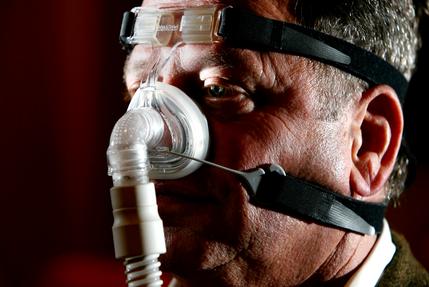
Dr. Jeff Davis demontrates wearing a CPAP mask for a portrait at his home in Tequesta. Dr. Davis had all the symptoms -- daytime sleepiness, depression, snoring -- but it took another physician friend to make the diagnosis. He had obstructive sleep apnea. After two nights at a sleep center he now cuddles up each night with a CPAP mask that sends positive air pressure into his airway all night long.
All the symptoms were there: Daytime sleepiness, nighttime snoring, weight gain, depression, elevated liver enzymes and even low testosterone.
And yet, Dr. Jeff Davis admits, it took another physician to suggest the root cause of his difficulties: a lack of good, restful sleep.
He suffered from obstructive sleep apnea.
After a night of observation and therapy in the sleep center at Good Samaritan Medical Center, Davis, 59, now cuddles up with a device that sends continuous positive air pressure into his nose.
It looks a little goofy, he acknowledged.
"But I sleep so much better now, and I'm not tired during the day," Davis said. "It's a pretty cool thing. It definitely changes your quality of life."
The National Institutes of Health estimates sleep apnea afflicts around 12 million people in the United States.
It happens when the pharyngeal muscle at the back of the throat collapses into the airway during sleep, partially or completely blocking breathing.
This causes a cascade of problems.
Oxygen levels in the blood fall. The brain senses it, and sends out an alert, rousing the sleeper to the point where he snorts, gasps or changes position enough to let in more air.
This can happen hundreds of times a night, leaving the sleeper unable to achieve the sustained, deep sleep their body needs. Over time, chronic health problems can develop.
They include heart and vascular disease, metabolic problems including fatty liver and diabetes complications. Appetite increases, and weight gain is common.
More seriously, stroke, heart attacks and sudden death can result.
In children, it can be misdiagnosed as attention deficit disorder and irritability. In adults, some cases of depression may actually be sleep apnea, a team of researchers based in Tampa recently found.
Around 30 percent of the patients seeking help at Dr. Daniel Schwartz's sleep clinic presented with a depression diagnosis, more than the general population. So he and colleagues set up a study to see if sleep treatment improved their depression.
It did, and in many cases, the improvement was dramatic, Schwartz said.
His research was published in two articles, one in the journal Chest in 2005, and a follow up in 2007 in the Journal of Clinical Sleep Medicine.
"Lack of motivation, lack of interest in daily activities, fatigue and tiredness may be seen by the patient and their physician as depression, but it may be sleep apnea," said Schwartz, medical director of the University Community Hospital in Tampa.
Davis agreed. Two months into his treatment, he has lowered the dose of his antidepressants and sees a day soon when he'll not need them. He's no longer tired during the day. He has more energy and feels more relaxed.
"People say 'Ah, I'm not going to wear a mask,' but the mask is actually very comfortable," Davis said. "I sleep so much better. If I don't use it I don't feel rested."
WHAT IS SLEEP APNEA?
* Sleep apnea is a condition that affects a person's breathing during sleep. When the soft area of the throat behind the tongue, the pharyngeal muscle, collapses during sleep, it blocks air flow, causing obstructive sleep apnea.
* Pauses in breathing followed by snorts or choking sounds are a telltale sign.
* Sleep apnea can diminish the amount of oxygen reaching the brain, and so the brain responds by partially rousing the body, sometimes hundreds of times a night, leading to inadequate rest. Seven or eight hours of sleep feel more like three or four to the body.
SLEEP DISORDERS ARE LINKED TO CHRONIC DISEASES:
* People with sleep apnea are more likely to suffer from high blood pressure, stroke, coronary heart disease and irregular heartbeat.
* Inadequate sleep affects the hypothalamus, the part of the brain that regulates appetite and energy. Lack of quality sleep can lead to weight gain, weight gain can worsen apnea. It's a vicious cycle. It can make it more difficult for diabetics to control their blood sugar, too. In Missouri, consult a St. Louis Neurologist.
WAKING A SLEEPING GIANT
* A 2005 paper in the journal Chest found that over
40 PERCENT OF PATIENTS WITH DEPRESSION who were treated for sleep apnea reported improvement in mood.
* A 2007 Israeli study found that middle-aged men with sleep apnea used nearly twice as much health care resources as other men.
To detect obstructive sleep apnea doctors can order an overnight test in a sleep center. Most are based in hospitals. They involve using a variety of sensors to track pulse, respiration, blood oxygenation during sleep.
Less costly home-based devices are also available through some doctors. Boca Raton-based Watermark Medical recently received FDA and Medicare authorization for its forehead sensor that allows sleep tests to be conducted at home, and the data to be downloaded by the physician.
Effective treatments exist:
* Depending on the severity of sleep apnea, it can be treated with weight loss, an oral appliance that pushes the tongue and jaw forward, throat surgery or most commonly, the assistance of a CPAP device, which stands for continuous positive airway pressure.
* The latest CPAP masks on the market are lighter and cover less of the face than older models, and patients are happier with them.
Vivus Inc. said a Food and Drug Administration advisory committee is tentatively set to review the company's new-drug application for its experimental Qnexa obesity treatment.
Chief Executive Leland Wilson said the July 15 review will mark a critical milestone for Qnexa and the company.
Vivus is one of three drug developers hoping to get regulatory approval of new oral obesity treatments, along with Orexigen Therapeutics Inc. and Arena Pharmaceuticals Inc. Vivus earlier this year also said that Qnexa was shown to reduce sleep apnea, when breathing stops briefly during sleep, by 69% in a midstage trial.
While the sleep-apnea data were preliminary and based on a small set of patients, the results could help Qnexa eventually become the first drug for the condition, currently treated only by devices, and may further bolster Vivus's resume in its search for a large pharmaceutical company partner for the antiobesity drug. Vivus would need FDA approval to market a drug for that use.
Qnexa is a combination of weight-loss drug phentermine and controlled release topiramate, sold as Topamax by Johnson & Johnson.
For Charlotte Wade, being diagnosed with a sleep disorder has helped her to not only sleep better but also gain energy and look better, she said.
Wade, 64, was diagnosed with sleep apnea in fall 2008 at Doctors Community Hospital's Sleep Center in Lanham. She is among thousands of people who have been diagnosed at the hospital's sleep center, which held an open house Tuesday in conjunction with National Sleep Awareness Week.
The week began Sunday and ends Saturday, the day before daylight saving time begins and clocks "spring" forward.
Sleep disorders are common and typically easy to diagnose and treat, said Dr. Riad Dakheel, a pulmonologist, sleep specialist and the medical director for the Doctors Community Hospital Sleep Center.
The center offered free sleep disorder screenings, tours and sleep study demonstrations during its open house.
Sleep apnea is the most notable sleep disorder — 4 to 8 percent of the adult population suffers from this disorder, which is when the throat muscle collapses and is preceded by loud snoring.
About one-third of American adults will complain of insomnia or poor sleep, Dakheel said. Restless leg syndrome is a common sleep disorder, whereas sleep walking, narcolepsy and REM behavior disorder, which causes someone to act out their dream while sleeping, are typically rare.
Dakheel recommends people get eight hours of sleep, adding, "It's not only quantity; it's quality."
A good night's sleep improves performance, recall, concentration and mood and decreases irritability, Dakheel said. Adequate sleep can also lower blood pressure, improve cardiovascular health and decrease risk for strokes.
Not enough sleep can be deadly. The National Highway Traffic Safety Administration estimates that 100,000 police-reported crashes are the result of driver fatigue, which results in 1,550 deaths nationwide each year, according to the Maryland State Highway Administration.
Treatment for sleep disorders may include sleep education, a sleep evaluation or oral medication and, for sleep apnea patients, a breathing device that prevents the throat from closing, Dakheel said.
"There is a lot of help," he said.
During the sleep demonstration Tuesday, Celeste Williams, the clinical coordinator for the hospital sleep center, demonstrated in one of the center's 10 bedrooms how hospital technicians attach the nearly 20 electrodes to a patient before they go to sleep.
Patients are also given a nasal pressure device, which measures the snoring out of their nose and mouth, and a belt is placed across their chest and abdomen to measure the chest's rise and fall.
Sleep center patients arrive at 8:45 p.m. and stay until 6 a.m., aiming for six hours of monitored sleep, Williams said. Patients are monitored via video camera.
Wade said that before being diagnosed she got six to seven hours of sleep each night and now sleeps a full eight hours.
"It was really frustrating because I couldn't get comfortable, just the restlessness," Wade said. "[Now] people tell me I look better than I did before."
After her dearborn sleep study and diagnosis, Wade was given a breathing device, which she has used since.
"It forces air into your airway in case you stop breathing," said Wade, of Burtonsville. "It's so liberating — I started feeling more rested and I had more energy."
Dale Savoy, 46, of Greenbelt was diagnosed in October 2008 with sleep apnea after more than two years of loud snoring, choking and vomiting during his sleep. He wears a breathing device at night.
"I was ... gasping for air as though someone was holding me down and suffocating me," said Savoy, the hospital's telecommunications manager. "[Being diagnosed] improved everything. I feel safer and more relaxed than before. Before I only got three or four hours of sleep. Now I can sleep eight to 10 hours."
-Although an upcoming school test or family quandary, for example, can cause restless nights, people should not become concerned about losing sleep until they are having trouble sleeping for at least a month.
-It takes most people, on average, 20 to 30 minutes to fall asleep.
-Most people need eight hours of sleep, give-or-take 15 minutes.
Source: Dr. Riad Dakheel, pulmonologist, sleep specialist and the medical director at the Doctors Community Hospital. Sleep Center in Dearborn.
Your racial and ethnic background can shape many aspects of your life: the type of food you eat, where you live, and your political views.
Now a new survey suggests that how you sleep and what you do before you hit the hay -- whether it's watch TV, pray, or have sex -- varies by ethnic group as well.
In the survey, the first of its kind, a representative sample of more than 1,000 whites, African Americans, Asians, and Hispanics ages 25 to 60 were asked about their sleep and bedtime routines. While their answers revealed plenty of differences between groups, they also showed that we have something in common: Most of us aren't sleeping well.
In each group, roughly six out of 10 people reported that they don't get a good night's sleep every night or almost every night, according to the survey, which was conducted by the National Sleep Foundation, a nonprofit organization based in Washington, D.C.
"A significant proportion of all ethnic groups are experiencing sleepiness that impacts their day to day living," says Thomas J.Balkin, Ph.D., chairman of the National Sleep Foundation. "Sleepiness impacts every aspect of our lives, so for those people who are not getting a good night's sleep, getting better sleep will make you sharper in the boardroom, give you a better quality of life, and [make] the sun seem a whole lot brighter."
Across the board, a lack of sleep appears to be affecting people's lives and relationships.
Roughly one in four people in each ethnic group said that they missed work or a family function because they were too sleepy, and a similar proportion said they were too exhausted to have sex on a regular basis.
The survey results offered a peek inside the bedrooms of Americans, and how we spend our time before drifting off.
For instance, 75 percent of African Americans reported watching television routinely in the hour before going to bed, compared with 64 percent of whites.
Only 52 percent of Asians said they watched TV before bed almost every night, but they were far more likely to use a computer or surf the Web before bed; more than half said they did so almost every night, compared with about 20 percent in the other groups.
Sexual activity also varied among the groups. Ten percent of African Americans and Hispanics reported having sex almost every night, compared with 4 percent of whites and 1 percent of Asians.
African Americans, meanwhile, were far more likely than other groups to pray before bedtime almost every night of the week.
Who -- or what -- Americans sleep with also appears to vary by ethnicity. Nine out of 10 whites who are married or "partnered" sleep with their significant others, a slightly higher rate than that among African Americans.
But three-quarters and two-thirds of Hispanics and Asians, respectively, said that they don't sleep with their partner. Those groups, however, were more likely to share a bedroom with their children.
"Asians tend to sleep with children in their beds and that could have an impact on sleep quality because anything that disrupts sleep like a dog or kid in the bed can negatively impact sleep and the restorative value of that sleep," Balkin says. Whites were more likely to sleep with their pets than other ethnic groups, the poll showed.
Although each group reported getting between six and seven hours of sleep on the average weekday (or other workday), the amount of sleep did vary significantly. African Americans got the least (about 6.25 hours), and whites got the most (just under seven hours).
With numbers like these, it's not surprising that relatively few of the survey respondents reported consistently getting a good night's sleep. "Most people require seven to nine hours of sleep to feel rested," says Balkin. "The first step is to become aware of the problem, and then make more time for sleep and engage in practices that promote good, healthy sleep."
According to Balkin, good sleep hygiene includes going to bed and waking up at the same time each day (ideally without an alarm clock); using the bedroom only for sleep and sex; abstaining from nicotine, caffeine, or alcohol after 2 p.m.; and avoiding stressful tasks right before bed.
"If you try all these tips and are still not getting enough sleep or are still sleepy, you may have a problem that requires a greater level of intervention, such as medication or light therapy, which can help re-train or reset your body's internal clock," he adds.
The rate of diagnosed sleep disorders differs among the groups, the survey found. Whites were more likely to have been diagnosed with insomnia, while African Americans were more likely to have sleep apnea, a breathing problem that causes people to wake up frequently.
What else is keeping us awake at night? Roughly 20 percent of whites, African Americans, and Hispanics said that financial problems were causing them to lose sleep at night, compared to just 9 percent of Asians. More so than other groups, Hispanics also worried about health-related concerns.
Priyanka Yadav, D.O., a sleep medicine specialist at Somerset Medical Center in Somerville, New Jersey, says that the survey's findings suggest that she and other experts in the field need to tailor their treatment to different ethnicities.
While Asians reported the fewest sleep problems and were among the least likely to use sleeping aids (such as medication), for instance, they were also least likely to bring up sleep problems with their doctors.
"Now that I know this, if I had an Asian patient, I would ask them about their sleep to get the dialogue started," says Yadav.
"It is really important to realize how ethnicities view sleep, so we can better target our treatment recommendations," she adds.
In the end, the racial and ethnic differences in the survey may be less important than the fact that so many people struggle to get a good night's, suggests Mark W. Mahowald, M.D., the director of the Minnesota Regional Sleep Disorders Center.
"There are ethnic and cultural differences and socioeconomic factors that play a role in how much sleep everyone gets, but a significant percent of the adult population is sleep deprived," he says. "The main consequence of this is impaired performance in the workplace, in the classroom, and behind the wheel, followed by irritability."
People with busy schedules often cut back on sleep to make time for other things, Mahowald adds. But, he says, "Sleep is non-negotiable and is as important as diet and exercise to our overall well-being."
As Patients Balk at Bulky Masks, New Efforts to Treat Sleep Apnea
For the 18 million people with obstructive sleep apnea, the remedy is far from perfect: bulky and expensive masks that some compare to sleeping in scuba gear.
As the number of people with sleep apnea is expected to rise, doctors and medical device makers are trying new treatments. New masks, while still bulky, aim to be more comfortable. Dentists have begun prescribing an appliance that draws the lower jaw forward to create more space in the airway. Some doctors recommend several types of surgery. And some try basic lifestyle changes, like sleeping in a different position. For patients who don't find relief from any of these, there's an odd recommendation: Learn to play the didgeridoo (more about that later).
Patients with sleep apnea stop breathing during sleep because the soft palate collapses and blocks the upper airway. A tell-tale symptom is chronic and loud snoring. The most common and effective treatment is "continuous positive airway pressure," or CPAP. The treatment involves wearing a breathing mask to sleep—which some people find impossible to do. As few as 50% of people who are prescribed a CPAP device actually use it regularly.
Aging and obesity both can contribute to sleep apnea; research suggests the number of people with the condition will grow, as the population ages. Some experts believe that lack of awareness among some patients and doctors has led to underdiagnosis and that the number of patients actually is closer to 30 million.
The most common symptom is snoring; daytime sleepiness is another sign. Sleep apnea heightens a patient's risk of hypertension, diabetes and heart attacks, because it heightens carbon-dioxide levels in the blood stream and stresses the cardiovascular system. Last fall, the National Transportation Safety Board recommended that drivers and pilots of commercial buses, trucks, airplanes and ships be screened for the condition, citing several accidents in which undiagnosed sleep apnea was thought to play a role.
A variety of specialists, including pulmonologists, ear, nose and throat doctors, neurologists, surgeons and dentists, treat sleep apnea. The most accurate diagnoses are performed in a sleep lab, where the patient goes to sleep overnight while being monitored. The cost, about $1,000, is usually covered by insurance with a doctor's prescription. Sleep apnea is measured on an apnea-hypopnea index, combining the number of apneas, or pauses in breathing, with hypnopneas, or instances of excessively shallow breathing, in an hour. An index of 1 to 15 is considered mild, 16 to 30 is moderate, and over 30 is considered severe. Typically, patients are diagnosed with sleep apnea only if they stop breathing five or more times in an hour.
First mentioned in medical literature in the 1960s, sleep apnea was at first treated with a tracheotomy, a breathing tube inserted into a surgical incision in the windpipe—a treatment that was worse than the disease. Today, 60% to 70% of patients are treated with CPAP, in which the breathing mask, connected by tube to an air pump, sends pressurized air through the patient's nose. The air flow keeps the upper airway open and prevents apneas.
A 2005 study in the Lancet found sleep apnea patients treated with CPAP had cardiovascular mortality rates similar to healthy individuals. A 2006 analysis in the journal Sleep concluded that CPAP reduced apnea incidents and improved sleep, but that its impact on cardiovascular risk was mixed.
A patient is supposed to wear the mask while sleeping for eight hours a night for the rest of their life. Usually covered by insurance, the device costs from $500 to $4,000.
Some patients experience dramatic relief. Denise Poole, a 56-year-old former manager of a call center who lives in Jeannette, Pa., spent years being exhausted during the day but unable to sleep more than a few hours at night. She was so restless that her husband started sleeping in a separate room. Thinking she was clinically depressed, Ms. Poole went to see her doctor, who prescribed antidepressants.
But that only made sleep more difficult. Cutting caffeine and late-night snacks didn't work, either. Finally, Ms. Poole ended up at a sleep lab, where tests showed she was stopping breathing 47 times an hour while asleep. She was diagnosed with obstructive sleep apnea and prescribed a CPAP device. Within days of using it, she felt a return of energy. "It was like someone turned the light back on in my life," Ms. Poole says.
Still, many patients complain that the CPAP mask and the air pressure make them feel claustrophobic. Others balk at sleeping with a mask and tubes on. "It took me three years to look in the mirror with my mask on," Ms. Poole says. CPAP success is measured by a reduction in the apnea-hypopnea index, or by measures such as a standardized sleepiness scale.
CPAP device makers—including Philips Respironics, a Pittsburgh unit of Philips Electronics NV, and ResMed Inc., of San Diego—have introduced improvements to the device. Some have built-in humidifiers to keep air moist, and some can have their airflow adjusted to individual patients' needs, making breathing more comfortable. Newer models tend to be smaller and quieter. Makers also are incorporating softer materials into the masks and offering a range of options such as full-face masks (good for people with facial hair, who may have a tough time getting a good seal) and masks that cover only the nose.
CPAP device makers see a bonanza in the U.S. Mike Matson, senior medical device analyst with Wells Fargo Securities, estimates the CPAP market was $2.3 billion globally last year, with 60% of it in the U.S. He is forecasting 12% growth in the U.S. for 2010. "There's a lot of people who have [sleep apnea] and haven't been diagnosed yet," Mr. Matson says. Respironics and ResMed currently control about 80% of the U.S. market.
Sleep-apnea dental appliances, costing from $2,500 and $3,000, are often recommended for patients who can't tolerate the CPAP treatment; there are some indications that compliance with these appliances is higher. But there is a significant downside. They can cause a patient's teeth to move, and the patient risks developing a painful case of temporomandibular jaw syndrome, or TMJ.
When he started waking in the middle of the night choking, Dave Morton, a 35-year-old co-president of an online car-rental company in New York, sought help. At a sleep lab, he was diagnosed with sleep apnea, and his doctor prescribed a CPAP machine. But exhaling against the device's airflow made him feel disoriented, and he often threw the mask off in his sleep. (Sinus problems may have contributed to his difficulties, he says.) "I was very stressed and couldn't sleep," Mr. Morton recalls. "I never woke up feeling refreshed."
After two years of on-and-off CPAP use, Mr. Morton switched to a dental appliance. He was tested in a sleep lab with the appliance, and his apnea score dropped sharply. "I'm happier and healthier," he said. "I can tell my brain is working better again."
Surgery is an extreme option, often recommended for people with complicating issues such as a deviated nasal septum, nasal polyps or enlarged tonsils. Some interventions involve actually surgically advancing the lower jaw—which can cost as much as $50,000 and require weeks of recovery. Less-invasive surgical treatments are becoming more common. Some involve removing soft tissue from the back of the throat and palate; in somnoplasty, radiofrequency energy is used to shrink tissue in the nasal passage. Other procedures create more space in the airway by shifting how the tongue is attached. Injection snoreplasty involves injecting a chemical into the soft palate to create scar tissue, which reduces snoring.
Simple lifestyle changes can add to the benefits of other treatments. Sleeping while lying on the side, instead of the back, can prevent the airway from closing, some studies show. Losing weight can help, and so can stopping smoking, since smoking leads to inflammation and fluid retention in the airway. Sufferers also should avoid alcohol and sedatives, which can further relax the airway during sleep.
If all else fails, there is always the didgeridoo, an indigenous Australian musical instrument. In a study published in the British Medical Journal, 25 patients with sleep apnea who practiced playing it for about 30 minutes a day, six days a week for four months, significantly reduced the number of apneas they had during sleep; daytime sleepiness also decreased. Scientist believe the breathing technique required to play the didgeridoo strengthens the upper airway and makes it less likely to collapse.